A Winter Cake
On a recent trip to France I picked up a copy of the October issue of Cuisine et Vins de France to read. On page 59 was a recipe for grenoblois caramélisé that looked extremely enticing. When I returned home, this was to become one of the first recipes from the magazine that I tried.
The cake was simple and had just four ingredients: walnuts, sugar, eggs, and rum. The icing had only one ingredient: sugar. The cake was moist and rich, but the icing stuck to my teeth and ruined the overall cake for me. The icing was really just a caramel topping that hardened to an almost toffee-like consistency. I carefully peeled the topping off the remaining pieces of cake and came to the conclusion: “This cake is worth making again (but the topping sucks!)” There had to be a better way to top the cake.
The answer was found in an old handwritten cookbook from my mother’s mother. The cookbook consists of recipes she learned as a young girl growing up in Bavaria at the end of the 19th century. Her version of the famous Viennese sachertorte has a chocolate glaze that was a favorite of mine when I was growing up. It also uses only four ingredients: chocolate, butter, sugar, and water. The glaze is similar to many that I’ve seen in French patisserie books. I tried it on the walnut cake and voilà!
Since I was no longer using the caramel topping of the original recipe I changed the recipe name to gâteau aux noix to better reflect the final product.
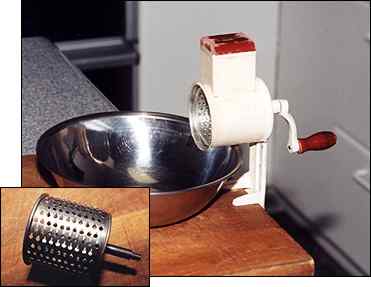
To obtain the right consistency for the ground walnuts I used an old nut grinder that my mother had bought in Germany in the 1960s. The nuts have to be finely and evenly ground. I do not believe that this is possible with a food processor. Nut meats that qualify as light or light amber seem to make the best tasting cake.
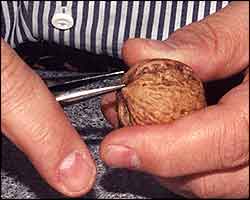
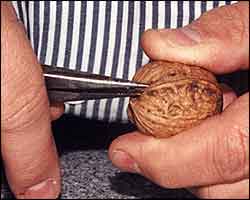
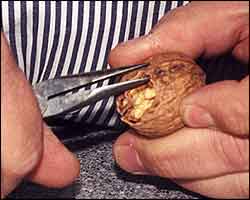
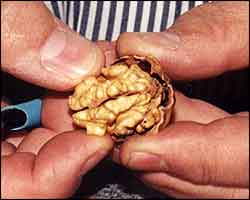
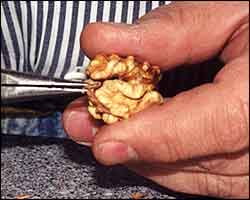
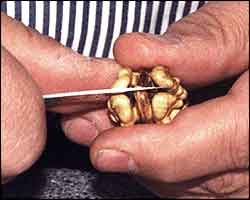
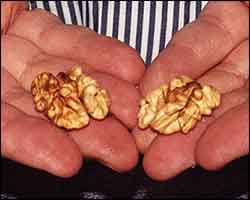
I also found that finding perfect walnut halves was impossible. The U.S. government standards for whole walnuts actually allow for a fair amount of imperfection. As a result, I developed my own method for shelling the nuts to obtain perfect halves.
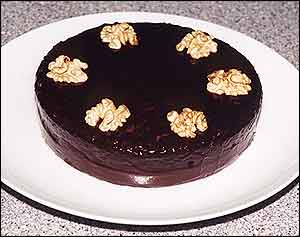
- For cake: Preheat oven to 375 °F. Prepare 7–inch springform.
- Whisk egg yolks with sugar until light in color. Add ground walnuts and rum. Mix well.
- Beat egg whites until stiff. Combine one-third with walnut mixture to loosen. Fold remaining egg whites into walnut mixture. Add to springform and bake 45 minutes.
- Allow to cool fully.
- For frosting: Melt butter and chocolate in the top of a double boiler. Add half of the sugar and mix. Add 2 tablespoons water and mix. When sugar is thoroughly incorporated, add remaining sugar and water. Stir until smooth.
- Pour over the top of the cake and carefully spread to even.
- Before frosting sets, arrange walnut halves around the top of the cake. Set aside until chocolate hardens.
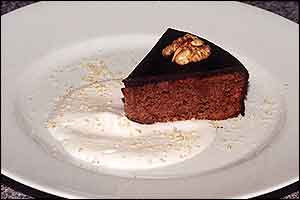
Note: Serve either plain or with lightly whipped cream flavored with a teaspoon of powdered sugar and a few drops of walnut extract. Sprinkle a bit of ground walnuts over the plate.
Yield: one 7–inch cake.
Source: Cuisine et Vins de France, October 1999, page 59 (cake); Liz Hertzmann, from the handwritten Bavarian cookbook of Bertha Koshland, ca. 1905 (glaze).
Also in my grandmother’s cookbook are recipes for cakes made entirely from chestnuts and hazelnuts. The chestnut cake is a family favorite that I traditionally serve at Thanksgiving. Although the recipe calls for chestnuts in the shell, nowadays I use shelled chestnuts from France that come in 420 gram bottles. (The cooked chestnuts from France packed in water and sold in cans are too moist and soft for this recipe.)
Last December I had a version of the famous linzertorte on a cruise ship. The pastry chef, Raymond, was Dutch and his torte was similar to the other nut cakes presented here. So I’ve duplicated Raymond’s cake based on the information he provided me.

©2000, 2014 Peter Hertzmann. All rights reserved.