Brasseries are a unique institution in France. Other countries have restaurants (in the United States these are called “coffee shops”) that are open from early in the day until late in the evening, but in France they are an institution. If you walk into a classic brasserie (the first one, Brasserie Bofinger, reportedly opened in 1864) you can almost be guaranteed you will be able to order a salade composé and get a salad large enough to have as a meal by itself. Or maybe your desire runs to a pizza or pasta — go to a brasserie. If you want a full meal there are steaks of various configurations with choices of sauces like Roquefort, béarnaise, poivre, or even sometimes mexicaine — all served with a garnish of vegetables and potatoes. If the classic steak frites is ordered, a plate of steak and French fries will arrive. For those who like their meat less cooked there is steak tartare, which in brasseries often will be prepared tableside or even left to the patron to assemble. Other classic dishes such as coq au vin, blanquette de veau, or even andouillettes are also often on the menu. Brasseries with an Alsacian bent will have a selection of tarte flambés and choucroute garni featured on their menus. For the non-red meat eater, there’s usually a chicken selection and a few choices of fish. In fact, some brasseries specialize in seafood and serve a variety of raw shellfish as well as cooked selections. And if you are still hungry, there’s dessert. Many brasseries have separate dessert menus for those who come just for the sweeter things in life. Nowadays, there are also brasseries that stray from the traditional and are serving a unique mix of modern, often original, dishes, but these are not as common as traditional brasseries.
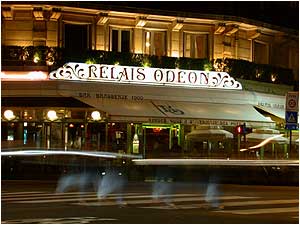 As you travel throughout France, you generally encounter brasseries in the center of the larger cities — in places that can support a restaurant that’s open long hours. Most items on the menus are available after eleven in the morning, or later, since most people stopping by in the morning are grabbing a cup of café express and maybe a croissant. For some, it’s a quick nip to kick start the day — two centiliters of marc to wake up. At lunch, brasseries are bustling with a lunch time crowd grabbing a salad, pasta, or pizza. (I once had a great hamburger in one in Paris!) In the afternoon, friends gather at the brasserie for coffee or drinks. Brasseries usually have full bars and many feature a selection of beers on tap. (The word “brasserie” is derived from the word for brewery.) In the early evening, people eating dinner occupy many of the tables. Later it’s the dessert eaters. But this is only the “plan.” At any hour of the day, you’ll find someone doing something different from what may be expected.
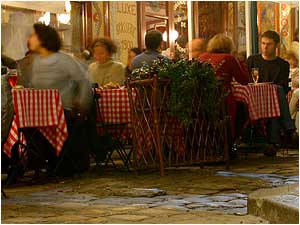
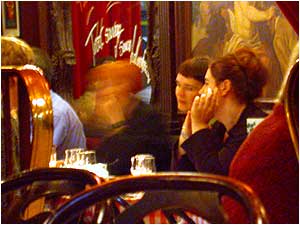 It’s not unusual for a brasserie to have two or three rows of small tables in front of the restaurant along the sidewalk. What can be a better summertime activity than sitting at a sidewalk table, quaffing a beer, while watching the world walk by? Usually, it’s drinks and snacks outside with the big meals inside, but in warm weather, the outside tables can be full of diners at meal times. There’s no minimum purchase outside — order a café express for a euro and sit all day. On a busy street when the weather’s nice and there are lots of walkers, I can’t think of a better way to pass the time.
Throughout France there are independent brasseries, but there are also chains like Au Bureau and Brasserie Maître Kanter. With the chains there’s consistency, but with the independents there’s adventure. Many of these brasseries also call themselves cafés because they serve snacks — the dividing line sometimes becomes quite blurred. But brasseries generally are not bars where people go as solo acts to imbibe. Often if you see a single person drinking alone, soon friends will arrive, cheeks will be kissed, and the solo drinker will no longer be alone. Brasseries are a place to socialize.
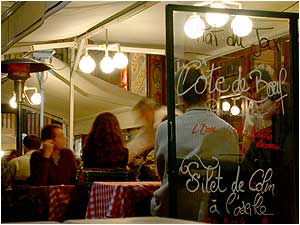 Like all restaurants in France, brasseries are required to post their menus outside. This makes it easy to consider your selection before choosing one brasserie over another. For those who cannot walk the streets of France at this moment, I offer a selection of menu possibilities so you can create your own brasserie fantasy. Of course it helps if a formally dressed waiter wearing a starched, long, white apron serves the meal.
Brasserie menus are typically divided into sections based on the type of selection being presented as opposed to the course being served — the practice for restaurant menus. The following are fictitious but typical sections that may be found on brasserie menus. How many and which sections will vary from brasserie to brasserie. [Note: click on the icons following a menu selection to link to a recipe for that selection. The icon ( ) indicates a new recipe. The icon (
 ) indicates recipes previously published on the web site.]
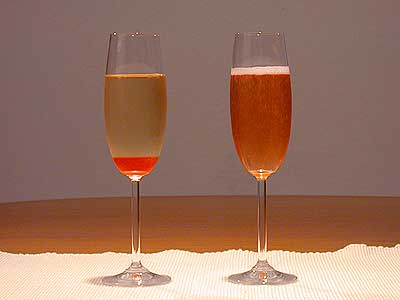
Some brasserie menus combine all boissons (drinks) in a single section, but the larger ones provide separate sections for each grouping of drinks. And the French love to start a meal with an aperitif.



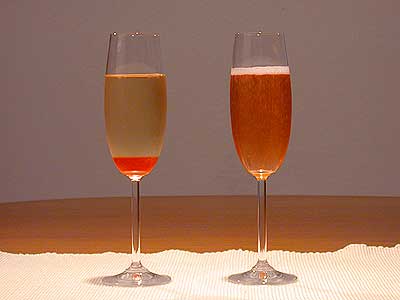
Kir royal champagne 
champagne with a splash of crème de cassis
Kir au vin blanc
white wine with a splash of crème de cassis
Coupe de champagne
glass of champagne
Porto blanc ou rouge
white or red port wine

The above list is a bit brief. Most brasseries carry multiple brands of pastis, vermouth, and other alcoholic selections. Some offer blended and single-malt Scotch whiskies and a limited number of other high-proof, distilled spirits, too.
After the aperitifs, some menus jump right to the entrées (first courses), but many will feature a selection of fresh coquillages (shellfish) such as huîtres (oysters) or crustacés (crustaceans) such as prawns — each type served raw or cooked as is appropriate for the item. Other menus provide a selection of mussels.
Also preceding the entrées may be sandwiches, eggs, pizzas, pastas, or salads. Sometimes these items are broken into their own sections and sometimes they are simply divided by whether they are served cold or hot.

Salade verte
a small green salad
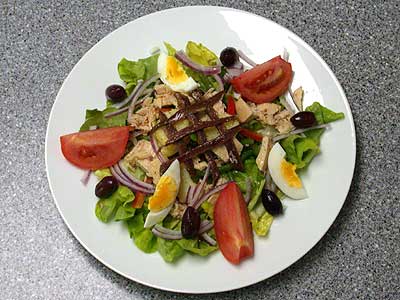
Salade niçoise
classic salade composée made with tuna, green beans, hard-cooked eggs, tomatoes, anchovies, olives, and greens
Salade paysanne
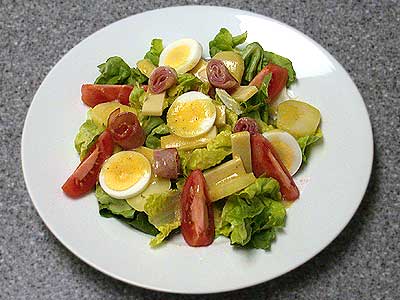
large salad made with cooked potatoes, tomatoes, hard-cooked eggs, walnuts, ham, brie, and greens
Salade parisienne
large salad made with cooked potatoes, tomatoes, hard-cooked eggs, ham, cheese, and greens
Frisée aux lardons et son œuf mollet 
frisée salad with bacon and a soft-boiled egg
Œuf dur, mayonnaise
hard-cooked egg served with mayonnaise
Crudités
a selection of grated or chopped raw vegetables served with a vinaigrette
Sandwich jambon et buerre
sandwich made with a baguette, ham, and butter
Sandwich fromage
sandwich made with a baguette and cheese, usually gruyère — other cheeses will be listed by name
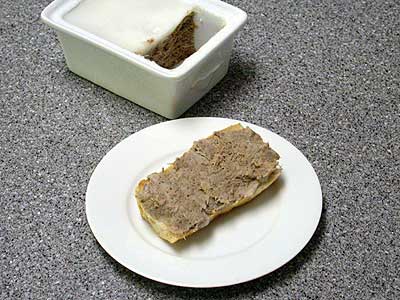
Sandwich rillettes
sandwich made with a baguette and “potted” meat
Salade tomates
sliced tomatoes, sometimes served with some greens and dressing
Some brasseries have a large selection of cold sandwiches while other brasseries don’t have any sandwiches on their menus. Similarly, some brasseries have huge selections of salads, while others may just have a green salad on their menu. The typical salad dressing served in brasseries is a vinaigrette made with mustard, wine vinegar, and olive oil. It may be made fresh or purchased in vats from a supply house.

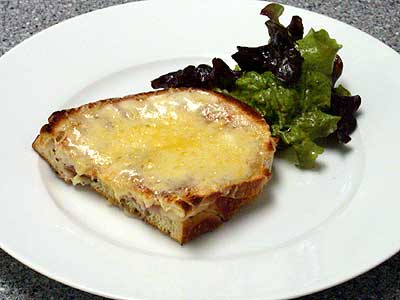
Croque-monsieur
grilled sandwich with ham, gruyère, and béchamel made with pain de mie — white sandwich bread
Croque-madame
a croque-monsieur with a fried egg on top
Hot dog
one or two frankfurters set lengthwise in a baguette toasted with gruyère melted on top
Quiche
savory custard tart filled with various items, often ham and onions
Omelette nature
plain omelet
Omelette jambon
ham omelet
Omelette fromage
cheese omelet
Omelette champignons
mushroom omelet
Omelette fines herbes
fresh herb omelet
Omelette complet
omelet with ham, cheese, and other items as listed
Omelets are often served with an accompaniment of pommes frites (French-fried potatoes) or a small green salad. If a brasserie serves pizzas, there’ll probably be a selection of 10 or 12 to choose from. If they serve pasta, spaghetti served with a tomato-meat sauce is most common, but some brasseries have a half a dozen pasta choices from which to pick.
Some brasserie menus will list starters, first courses, as entrées while others will categorize them as hors-d’œuvres. A menu without a specific section for sandwiches, eggs, pizzas, pastas, or salads may also include one or more of those items in their list of starters. A menu with these items separated out will have an entrée section that looks more like the following.

Terrine de lièvre
slice of rabbit terrine
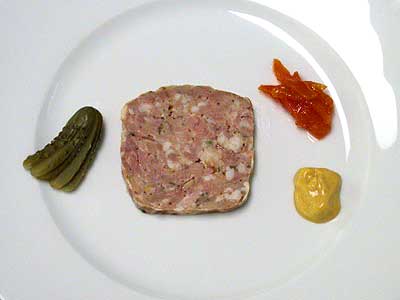
Pâté de campagne
coarse pork pâté
Saumon fumé
smoked salmon
Soupe à l’oignon gratinée
onion soup baked with a slice of baguette and cheese on top
Escargots de Bourgogne
snails cooked in garlic and butter
Assiette de saucisson sec
selection of sliced, dried sausages
Fillet de hareng
pickled herring fillet, usually served with potato salad
Fois gras frais de canard
slice of fresh foie gras terrine served with toast
Main courses can also be grouped together or separated into meat and seafood; the mix is a function of what the brasserie emphasizes. These selections are usually served with a side-dish of vegetables. There often are a variety of steaks — entrecôte (rib steak), rumsteck (rump-steak), bavette (skirt steak), onglet (flank or skirt steak), and faux-fillet (sirloin) — served with a choice of sauces. Alsacian-style brasseries will serve a number of choucroutes, but other brasseries may only have one on their menu. Other brasseries may have a separate section of sausage specialties. In addition to the vegetables listed with each menu item in the main courses, some brasseries offer an additional and separate selection of vegetable side-dishes called legumes aux choix.

Rognons de veau flambée
veal kidneys
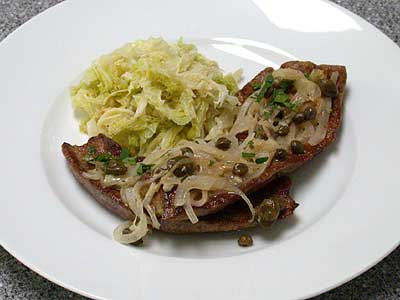
Foie de veau poelé
pan-fried veal liver
Saumon à l’unilaterale
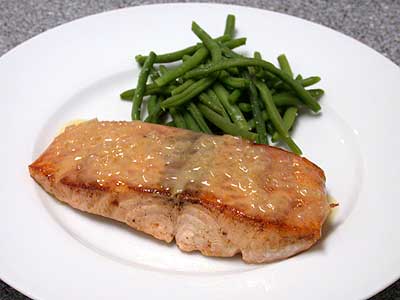
fresh saumon grilled on one side only
Sole fraîche à la meunière
fresh fillet of sole cooked in butter
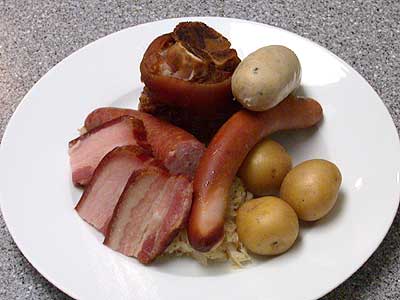
Choucroute alsacienne garnie
selection of smoked and cured meats and sausages served with sauerkraut and boiled potatoes
Pavé de turbot poché hollandaise
poached turbot fillet with a hollandaise sauce
Steak tartare
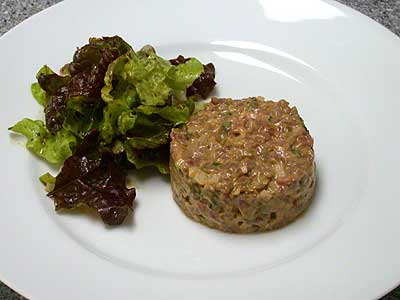
chopped raw beef seasoned with raw egg, capers, chopped onions, and parsley
Entrecôte grillée béarnaise
grilled rib steak with béarnaise sauce
Andouillette AAAAA* Grillée
grilled sausage made of pork or veal intestines
Hamburger œuf à cheval
grilled, chopped beef served with a fried egg on top
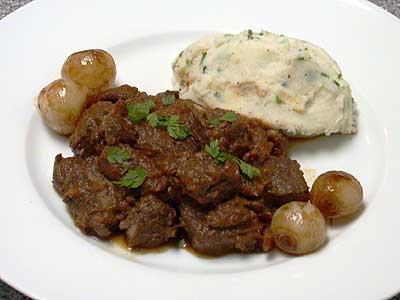
Bœuf bourguignon
beef stew made with Burgundy wine
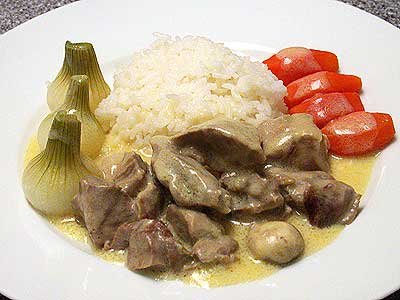
Blanquette de veau
veal stew with a white sauce
* Association Amicale des Amateurs d’Authentiques Andouillettes — society of lovers of authentic andouillettes
In addition to the standard selection of main courses, many brasseries also offer a selection of plats du jour — daily specials. These may be written on the menu or posted on the wall.
 Following the French tradition of eating cheese at the end of the meal, brasseries usually offer the patron a small selection of cheeses. It is rare for a brasserie to have a large cheese tray like the fancy restaurants have. If they offer cheese there is a small list on the menu listing a half a dozen choices or maybe even a combination plate. If the patron orders camembert, he or she gets a wedge of camembert on a plate. There may also be a few slices of fresh fruit and a piece of bread offered with the cheese, but sometimes it is just served plain.
To accompany the meal there is a choice of wine by the glass, pitcher, or bottle; beer on draft or from the bottle; mineral water with or without gas; soft drinks; and carafe d’eau — a carafe of tap water. A brasserie may have a list of vintage wines, but it is more common to find a carte des vins — wine list — that lists the selection by appellation. When ordering wine by the pitcher, the selection may be limited to just rouge ou blanc — red or white.
To end the meal, or for a snack, a separate menu of dessert choices may be offered by the waiter. Some brasseries offer an extensive selection of dessert possibilities, while others have a more limited selection from which to choose. There may be whole pages of ice cream and sorbet selections and combinations. There may be a large selection of crepes or baked items. But a typical limited selection may look like the following.

Crème brûlée
custard with a caramelized sugar top
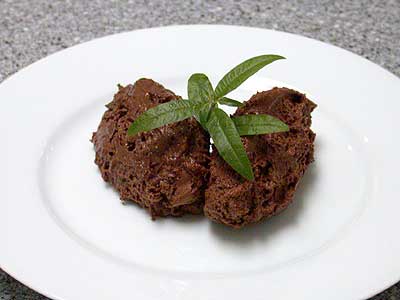
Mousse au chocolat
chocolate mousse
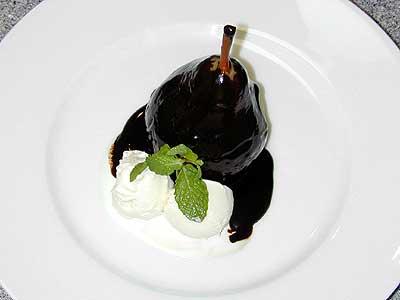
Poire belle-Hélène
poached pear with chocolate sauce
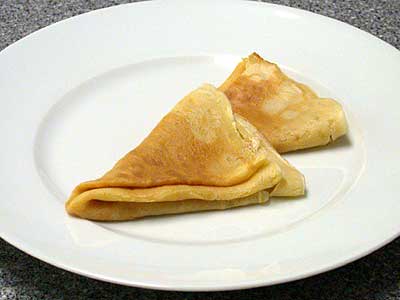
Crêpe au sucre
plain, thin pancake sprinkled with sugar
Coupe de fruits frais
bowl of fresh fruit
Coupes de glace ou sorbet
one or more scoops of ice cream or sorbet
Œufs à la neige
poached egg whites served with a fruit sauce
Tarte tatin
upside down caramelized apple tart
Tarte aux poires
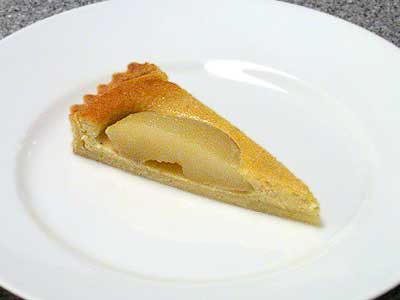
pear tart
Gâteau au chocolate
chocolate cake
This list of desserts is representative of the bare minimum usually found in brasseries — most are much longer.
Following the meal, or sometimes instead of one, the patron can choose from a selection of boissons chaudes — hot drinks — and digestifs — after-dinner drinks. The usual full selection of coffees and teas are available. A short list of digestifs may look like the following, but chances are that any liquor that one desires can be obtained upon request.

Although the service in a brasserie may be quick, it is really okay to linger, to relax, and to enjoy the experience. The food may not always be haute cuisine, but the experience can still be quite pleasant.