Les Omelettes

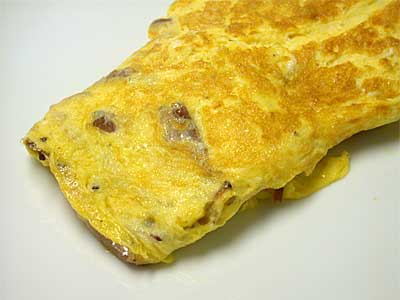
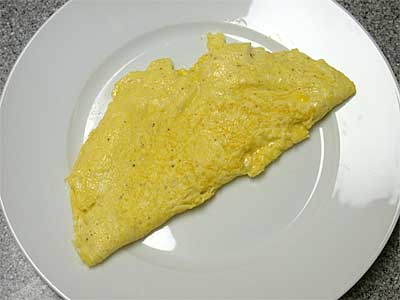
Today, an omelet in France is more than likely to be a simple one served plain or filled with ham, cheese, or mushrooms. The omelet will be served with fried potatoes or a green salad or both. These omelets, as described above, will be present on most of the brasserie menus in France. They are very common. Occasionally, a fine restaurant will serve an omelet in one form or another, either savory or sweet, but this omelet will definitely be a step up from those served in brasseries. Along with a few omelets prepared in homes, this is the extent of omelets appearing on the French table.

As I’ve perused French cookery books over the last few years, I’ve become aware of a disconnect between the frequency and variety of omelets today compared to how often they appear in old books. I can barely pick up a general-interest French cookbook and not find a plethora of omelet recipes, although recently published books present significantly less omelet recipes than those from fifty or more years ago.

Omelets have been a part of French cuisine for hundreds of years. One of the earliest texts about French cooking is a single large chapter in the manuscript called Le Ménagier de Paris. Written around 1393, Le Ménagier has two recipes for alumelles, thought to be an early reference to flat omelets. In 1653, François Pierre de la Varenne published his Le Patissier François with 22 recipes for sweet and savory aumelettes, many of which are almost identical to recipes published three centuries later.

The place of the omelet today in a French meal is not as a breakfast dish, but as an entrée (a first course) or a dessert. Add a little extra milk and sugar to a basic omelet preparation and you have a custard. Add a little flour and the omelet becomes a crepe batter. (The omelets we are concerned with in this article are those made primarily with eggs.)

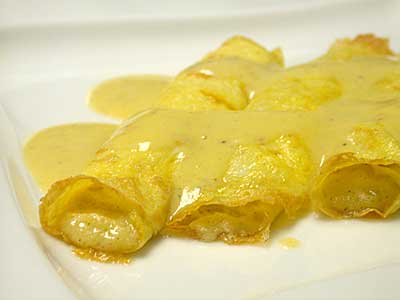
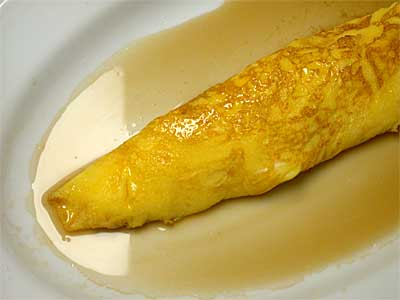
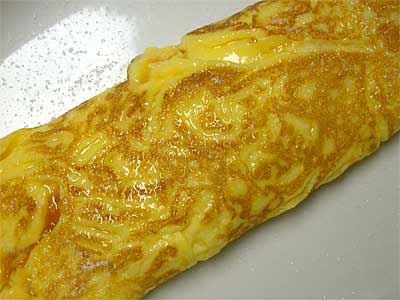
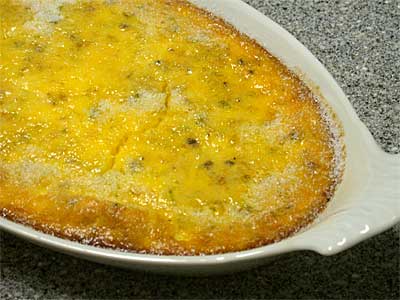
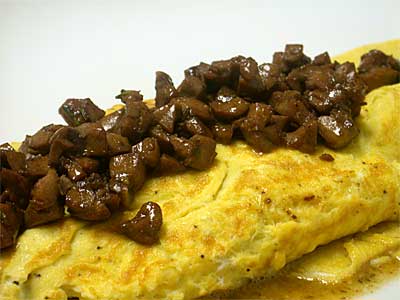
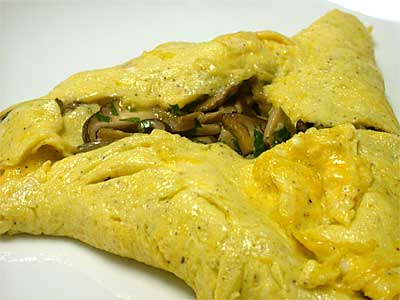
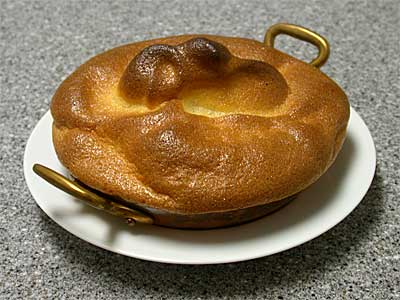
Early omelets were served flat or rolled. Nowadays, they can be flat, rolled, folded, stacked, or souffléed. They can be savory or sweet. The filling can be mixed with the eggs or rolled inside the cooked eggs or spread across the top of the finished dish.

In former times, it was recommended that the frying pan used for omelets be only used for that purpose. Today, with the availability of nonstick surfaces, this is less important. More important is that the shape of the pan allows for easy removal of the finished omelet, usually by sliding it out of the pan.

There is a general consensus today that the eggs should only be beaten at the last minute and then only just enough to blend them. The beating should be done with a fork, not a whisk; although if you have to beat more than a half a dozen eggs at a time, the whisk is a lot easier and faster. I’ve seen cooks in French kitchens strain the eggs before cooking them, but the only cookbook I’ve seen straining suggested in was written in the first half of the nineteenth century.

Some books call for lifting the edges of the eggs as they cook to allow uncooked egg to flow underneath the cooked eggs. When the eggs are about two-thirds set, the whole mass is flipped so the cooked side is up. This produces a generally drier omelet than the other common method where the eggs are stirred with the flat side of the fork until they are mostly set. I like this latter method better because the eggs don’t have to be flipped and the result is soft and moist. If any holes develop in the omelet while it is cooking, some of the uncooked egg can be moved with the back of the fork to patch the hole. If I am making the omelet for someone who wants a drier omelet, I place the finished omelet in a warm oven for a few minutes to allow it cook a little further. The omelet should always be served on a warm plate.

Since I knew from the start that I would have a lot of omelet recipes to choose from for this article, I decided to limit the sources to older ones. They range from the earliest recipe I found that was called an “omelette,” first published in 1656, to some relatively modern recipes from 1938. The list is not exhaustive, but it does represent many of the major cookbooks written during that period. The recipes in the article are chronologically presented, rather than being listed by whether they are savory or sweet. Most of the recipes are common. For example, I could have chosen a recipe for omelette de champignon, mushroom omelet, from almost any of the books, not just one or two.

Pierre de Lune. Le Cuisinier, 1656. Reprinted in L’art de la cuisine française au xviie siècle, Paris: Éditions Payot & Rivages, 1995. In French.

De Lune presents 22 omelet recipes, both savory and sweet. They are mostly in a section of his book entitled “Egg dishes for entrées and entremets appropriate for Lenten days.” Most of the recipes call for 12 to 24 eggs, but six of the recipes call for no eggs and appear to be more like a flat bread made from a batter of flour, wine, milk, salt, and butter. Because of the large number of eggs required for each recipe, it probably can be assumed that de Lune was preparing omelets for large groups of diners and that the eggs used in those days were much smaller than today. He provides very little information as to what the final omelet should look like, but most of his omelets apparently were flat presentations.

 omelette de champignons – mushroom omelet 

 omelette aux pistaches – pistachio omelet 

François Massialot. Le Nouveau cuisinier royal et bourgeois ou cuisine moderne. 4th ed. 3 vols. Paris: Joseph Saugrain, 1748 (vol. I & II) 1750 (vol. III). Originally published as Le Cuisiner roïal et bourgeois (Paris: Charles de Sercy) in 1691. In French. Reprint, 2003 by Elibron Classics, divided into 5 volumes.

Masssialot includes thirteen omelet recipes, both savory and sweet. Many of the recipes include a half dozen or so variations. Massialot provides more detailed explanations than de Lune. Most of his omelets are cooked on top of the stove and served flat, but one is rolled and two are baked in the oven. In most of the recipes he states that the omelet should be served as an entremet. Massialot sometimes combines sweet ingredients with savory ones such as in his omelette à la moëlle which includes beef marrow and dried fruits.

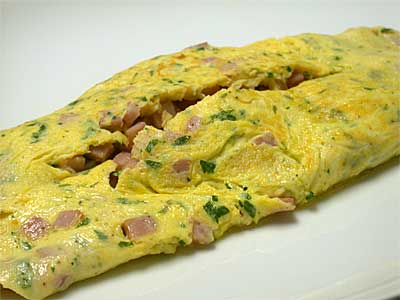
 omelette de jambon – ham omelet 

 omelette à la Noaille – citrus omelet 

Marie Antonin Carême. L’Art de la cuisine française au dix-neuvième siècle. Original edition published between 1833 and 1844. 3 vols. Paris: Au Dépot de Librairie, 1854. In French. Reprint, 2003 by Elibron Classics, divided into 4 volumes.

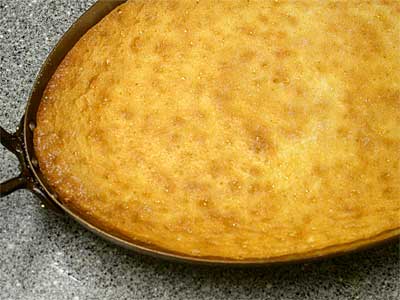
It’s not until the last chapter of this massive work, completed by Armand Plumery after Carême’s death, that eggs become the subject. In that chapter there are 29 recipes for both savory and sweet omelets. The savory omelets are cooked either on top of the stove and flipped in order to brown both sides or baked in an oven. In either case, the omelets are served flat except in the case of the truffle omelet, which is rolled. Some of the sweet omelets are omelette soufflées, which the author says have been replaced in many restaurants by soufflés. Both are baked, but the omelette soufflée is baked in a frying pan instead of a soufflé dish and the omelet doesn’t rise as high. The other sweet omelets tend to be rolled. Many are simple ones filled or coated with jams or sugar.

 omelette au lard – bacon omelet 

 omelette soufflée à l’orange – orange-flavored omelet soufflé 

Antoine Gogué. Les Secrets de la cuisine française. 1st ed. Paris: Librairie Hachette et Cie, 1856. In French. Reprint, 2003 by Elibron Classics.

Gogué presents a sparse collection of thirteen detailed, common sweet and savory omelet recipes. He points out that the secret of good omelets, as professed by Brillat-Savarin (1755-1826) was “omelette bien battue, assaisonnée de bon goût, cuite à point, coquettement roulée et dont la couleur et la fumée appellent l’appétit des convives,” or “beat well, season properly, cook just until done, roll attractively, and color nicely so the aroma calls to the guests.”

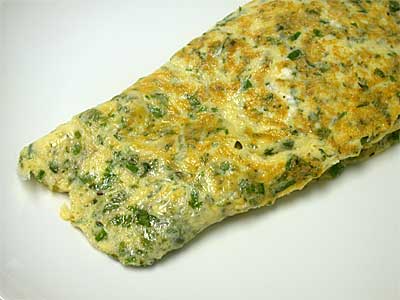
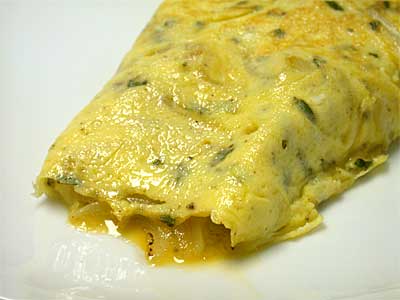
 omelette aux fines herbes – herb omelet 

 omelette aux confitures – jam omelet 

Urbain Dubois and Émile Bernard. La Cuisine classique: études pratiques, raisonnées et démonstratives de l’école française appliquée au service à la russe. 1st ed. Paris: Dubois & Bernard (self-published?), 1864. In French. Reprint, 2003 by Elibron Classics, divided into 2 volumes.

Considering there are nearly three thousand recipes in this book, it is surprising to note that there are only a few omelet recipes. There are just four savory and five sweet omelet recipes, and none are unique. In some cases, variations are suggested so the total number of recipes could be thought to be higher. Because the authors organized dishes in this book for service à la française (despite the title of the book), the omelets are presented in the entremets section of the book.

 omelette au fromage – cheese omelet 

 omelette à la Célestine – vanilla omelet 

Jules Gouffé. Le Livre de cuisine. 1st ed. Paris: L. Hachette et Cie, 1867. In French. Reprint, 2003 by Elibron Classics, divided into 2 volumes.

Gouffé divided his cookery book into two parts: the first designed for the “domestic cookery” and the second for “high-class cookery.” He includes omelet recipes in both parts. Gouffé presents three basic rules of omelet preparation: never use more than twelve eggs for an omelet; only use a proper omelet pan; and never over beat the eggs. He starts by generously coating the pan with butter over high heat. The eggs are then added. As they cook at the edges they are moved to the center with a fork. When half cooked, the omelet is flipped and the other side cooked. One third of the omelet is folded from the edge to the center from opposite sides and then the finished omelet is flipped onto the serving plate. The fillings are either placed in the center of the omelet before it is folded or mixed in with the eggs when they are first put in the pan.

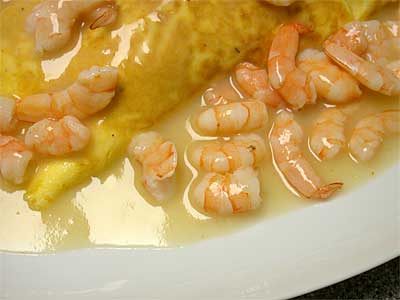
 omelette aux crevettes – shrimp omelet 

 omelette au rhum – rum omelet 

Auguste Escoffier. The Complete Guide to the Art of Modern Cookery. Translated by H. L. Cracknell and R. J. Kaufmann. New York: Mayflower Books, Inc., 1982. Translation of 4th edition of Le Guide culinaire (1921).

Escoffier presents a large list of omelets, both savory and sweet. Most of the 58 savory omelets are comprised of three eggs, salt, and pepper, plus whatever filling makes the omelet unique. The omelets are rolled. Since Escoffier was preparing these omelets as part of a meal served by service à la russe, it may be assumed that each is intended as an individual portion. He divides his fourteen sweet omelets into four categories: omelets made with liquor; jam omelets; souffléed omelets; and surprise omelets. The surprise omelets are cake and ice cream combinations coated with meringue and baked just before serving.

 omelette lyonnaise – onion omelet 

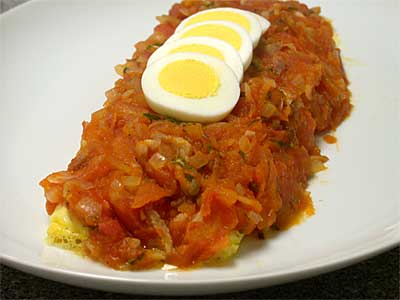
 omelette Grandval – tomato omelet 

 omelette aux rognons – kidney omelet 

Ali-Bab. Gastronomie pratique: études culinaires. 5th ed. Paris: Flammarion, 1928. In French. Reprint, 1993.

Henri Babinski, writing under the pen name of Ali-Bab, starts his section on omelets by writing, “Il peut paraître banal de donner une recette d’omelette, car tout le monde croit savoir la faire. Cependant, en réalité, il ne manque pas de gens qui n’ont jamais mangé une omelette vraiment bonne.” Or “It may seem banal to give a recipe for an omelet, because everyone thinks they know how to make one. Actually, there is no lack of people who have never eaten a really good omelet.”

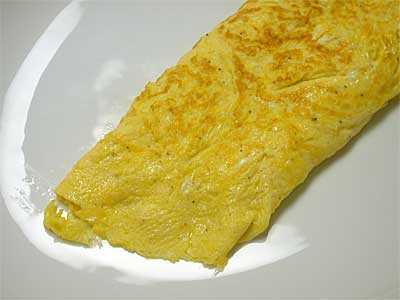
Possibly falling back on his background as an engineer, Babinski provides very detailed information about making a generic omelet for two people. Use a frying pan that’s 15 to 18 centimeters in diameter. Use four eggs that weigh about 70 grams each. Place the eggs in a bowl, add 30 grams of milk, 4 to 5 grams of salt, and one-half gram of ground pepper. Beat the eggs for about a minute. Melt 50 grams of butter in the frying pan over high heat until the butter browns slightly and develops a nut-like aroma. Pour the eggs into the pan and wait about half a minute for the eggs to start to set. Then, using a fork, rapidly lift the edges all around and tilt the pan so the uncooked eggs runs underneath the cooked egg. Repeat this process a second time and then let the pan set until the eggs are cooked. The entire process should take about two minutes. The eggs are cooked when steam rises from the edges. The omelet is folded in half and slipped onto the serving plate in one, single motion. He then discusses the process of preparing an omelet filled with hot or cold ingredients. In the end, the only savory recipe he provides is for a plain omelet, although he lists a dozen or so possibilities.

In a similar vain, Babinski discusses sweet omelets and provides a dozen or so examples without providing specific recipes, except for omelette soufflées, which require a much different method of preparation. Babinski does recommend rolling sweet omelets instead of folding them as he did with the savory omelets.

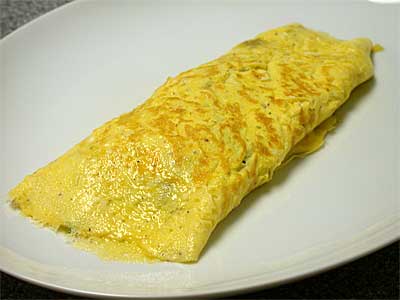
 omelette au naturel – plain omelet 

E. Saint-Ange. La Bonne cuisine de Mme. E. Saint-Ange. 1st ed. Paris: Librairie Larousse, 1929. In French.

Mme. Saint-Ange is a little less specific in her general directions than Babinski. She does specify two eggs per person, although she doesn’t give a clue as to what size they should be. She cautions not to over beat the eggs and says to melt the butter without browning it. She uses a stirring motion to cook the eggs. To roll the omelet onto the serving plate, Saint-Ange recommends a method where the pan is tilted near the plate and the handle tapped sharply to cause the omelet to “roll” out of the frying pan. None of her fourteen recipes for savory omelets are unique, as is the case with most of the cookbooks from the 19th and the 20th centuries. She, like her predecessors, presents her versions of the time-tested, classic recipes. Saint-Ange provides only one sweet omelet recipe—a recipe for an apple omelet.

 omelette aux épinards – spinach omelet 

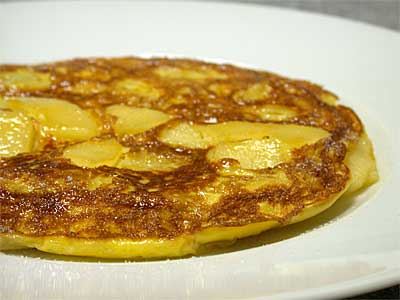
 omelette aux pommes – apple omelet 

Prosper Montagné. Larousse Gastronomique. Translated by Nina Froud, Patience Gray, Maud Murdoch and Barbara Macrae Taylor. Edited by Charlotte Turgeon and Nina Froud. New York: Crown Publishers, Inc., 1961. English translation of 1938 French edition published by Librairie Larousse, Paris.

With over one-hundred recipes for savory omelets and a dozen or so for sweet omelets, Montagné could be crowned the Omelet King! He discusses the basics of omelet making only briefly, but then provides a panoply of recipes, many with historical notes. Many of the preparations have more than one version presented.

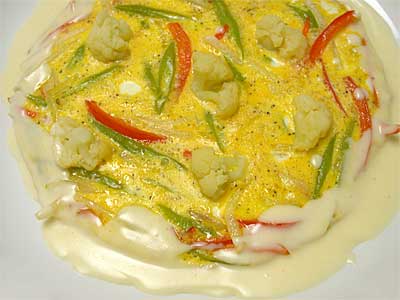
 omelette Du Barry – cauliflower omelet 

 omelette à la jardinière – garden-vegetable omelet 

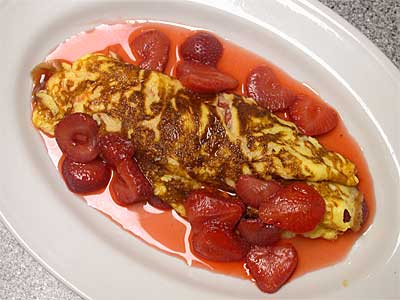
 omelette aux fraises – strawberry omelet 

Today, it’s easy to prepare a savory omelet from leftovers for a quick supper or a sweet omelet for an unusual dessert. The 21 recipes presented in this article should provide a basis for expanding your omelet repertoire. Experiment. Enjoy.

©2005 Peter Hertzmann, Inc. All rights reserved.